For many new exporters, the moment of excitement usually comes when the first international order arrives. The buyer is ready, the product is packed, and the shipment is about to move. But somewhere between preparing the shipment and clearing customs, one document suddenly becomes extremely important — the Certificate of Origin.
In international trade, countries want to know where a product was actually made. Was it manufactured in India? Was it processed somewhere else? Does it qualify for a special trade agreement?
The document that answers these questions is the Certificate of Origin.
What Exactly is a Certificate of Origin?
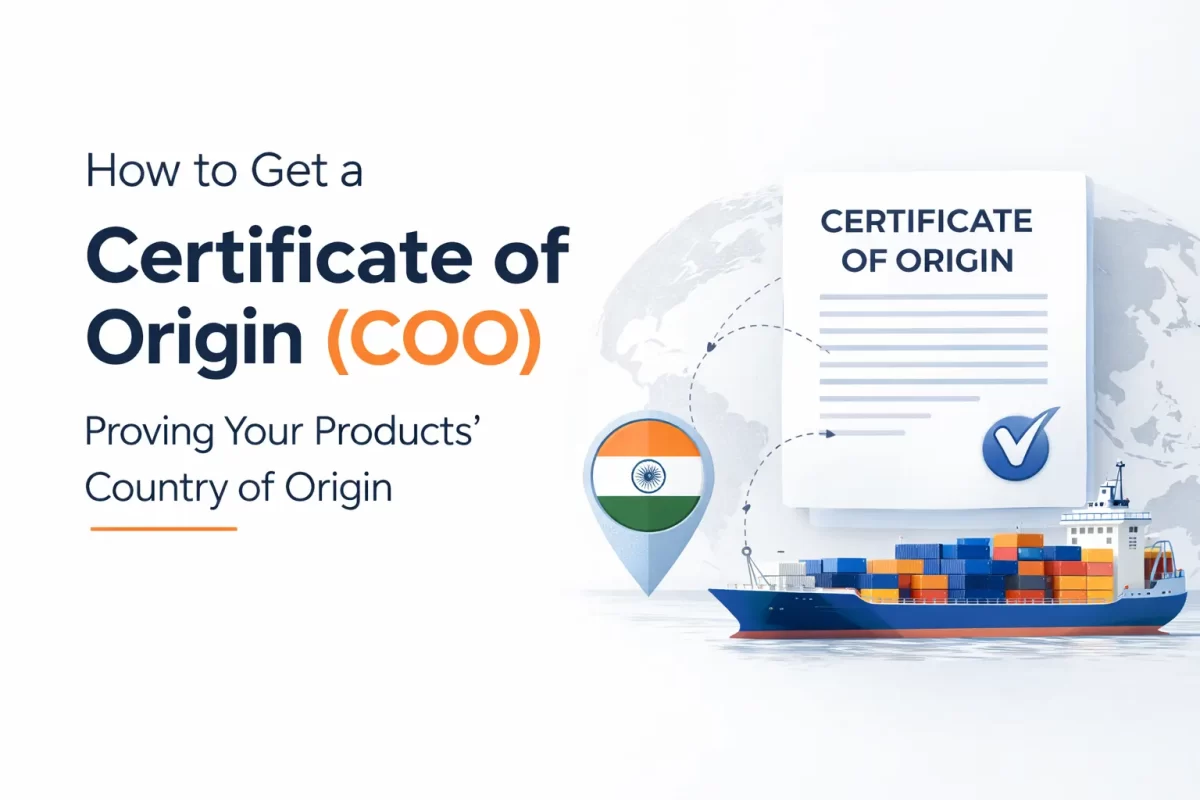
A Certificate of Origin (COO) is a document that certifies that the goods being exported were manufactured, produced, or substantially processed in a particular country.
In simple terms, it tells customs authorities and buyers:
“This product genuinely originates from this country.”For exporters from India, this document becomes especially important because it often determines how much import duty the buyer will have to pay in their country.
Many countries offer lower duties or tariff benefits for goods coming from certain nations under trade agreements. In such cases, the Certificate of Origin acts as proof that the shipment qualifies for those benefits.
In India, these certificates are issued by authorized agencies under the framework of the Directorate General of Foreign Trade, which operates under the Ministry of Commerce and Industry.
Why Buyers Often Ask for It
Imagine a buyer in another country importing goods from India. When the shipment arrives, the customs authorities in that country will examine several documents before allowing the goods to enter the market.
One of the key questions they ask is: Where were these goods made?
The answer affects multiple things:
- Import duty rates
- Eligibility for trade agreements
- Compliance with trade restrictions
- Authenticity of the product’s origin
Without a Certificate of Origin, customs authorities may either delay the shipment or apply higher import duties.This is why many international buyers include it as a mandatory requirement in export documentation.
Two Types of Certificates Exporters Should Know
Exporters usually come across two types of Certificates of Origin.
The first is the Non-Preferential Certificate of Origin. This simply confirms that the goods were manufactured in India but does not provide any tariff benefits. It is mainly used for general customs requirements and buyer verification.
The second type is the Preferential Certificate of Origin, which is used when goods qualify for reduced or zero duty under trade agreements signed by India with other countries.
These agreements can significantly reduce import duties for the buyer, making the product more competitive in the foreign market.Organizations such as the Federation of Indian Export Organisations (FIEO) and various chambers of commerce are authorized to issue these certificates.
The Process Has Become Much Easier
Not too long ago, exporters had to visit chambers of commerce physically with stacks of documents to obtain a Certificate of Origin.
Today, the process is largely digital.
Exporters can apply through the electronic Certificate of Origin platform managed under the Directorate General of Foreign Trade. The system allows exporters to submit their application online, upload documents, and receive approval electronically.
The basic information required usually includes:
- Exporter and importer details
- Description of goods
- HS code
- Quantity and value of the shipment
- Supporting export documents
Once the application is verified by the issuing authority, the certificate is approved and made available digitally.
The Documents You Usually Need
To apply for a Certificate of Origin, exporters typically submit a few standard export documents.
These often include:
- Commercial invoice
- Packing list
- Shipping bill
- Bill of Lading or Airway Bill
- Import Export Code (IEC)
- Manufacturer’s declaration confirming the origin of goods
These documents help the issuing authority verify that the goods genuinely originate from India.
A Simple Document That Builds Trust
In the larger picture of international trade, the Certificate of Origin may look like just another piece of paperwork. But in reality, it plays a much bigger role.
It helps governments apply fair trade rules, helps buyers reduce costs through trade agreements, and helps exporters prove the authenticity of their products.
For exporters from India, understanding how to obtain and use a Certificate of Origin is an important part of building smooth and trustworthy international trade relationships.
Sometimes, a small document can make the difference between a shipment getting delayed at customs and a shipment moving effortlessly across borders.
And in global trade, that difference matters a lot.