When businesses from different countries trade with each other, the biggest challenge is not always the product or the price — it’s clarity around responsibility.
- Who arranges the shipping?
- Who pays for insurance?
- Who handles customs clearance?
- And most importantly, who bears the risk if something happens to the goods during transit?
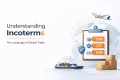
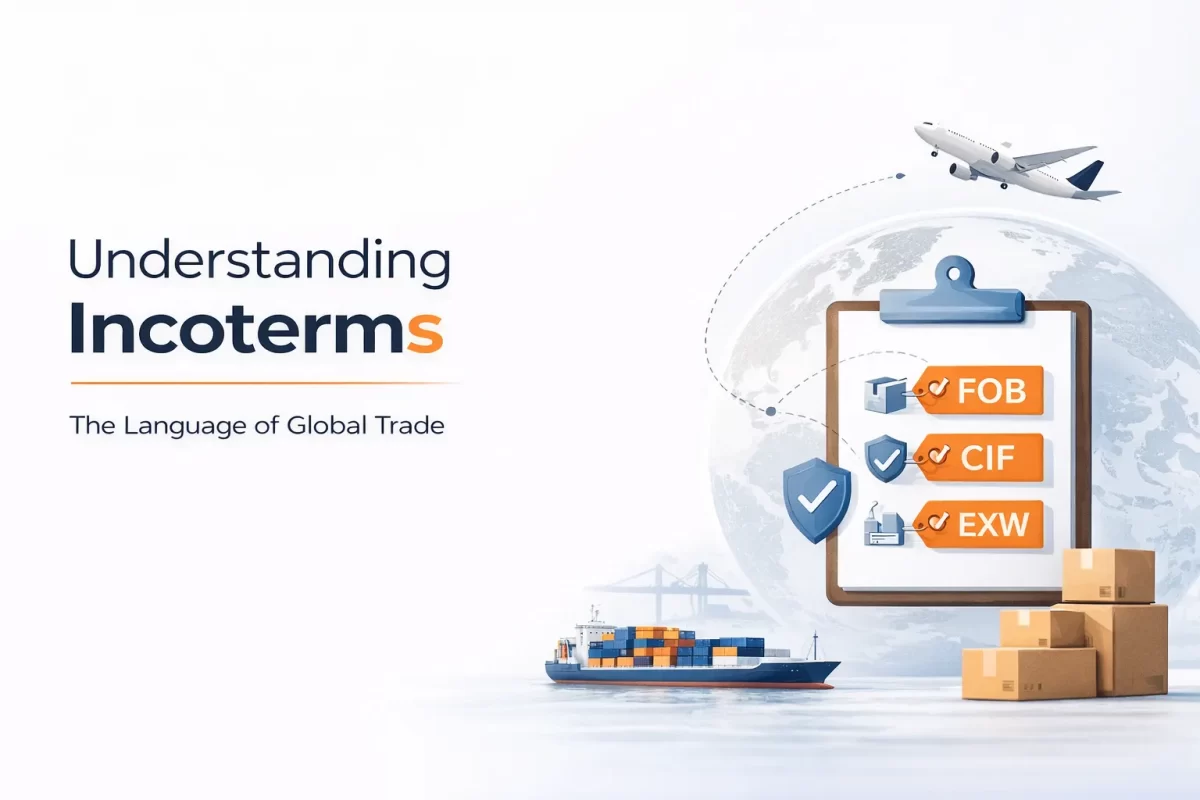
To avoid confusion in such situations, international trade relies on a set of standardized rules called Incoterms.Published by the International Chamber of Commerce (ICC), Incoterms — short for International Commercial Terms — define the responsibilities of buyers and sellers in global trade transactions. They help ensure that both parties understand who does what, who pays what, and when the ris
For exporters, learning Incoterms is like learning the basic language of international trade.
Why Incoterms Exist
Imagine an exporter in India selling goods to a buyer in Europe. The shipment has to move from the factory to the port, then onto a vessel, travel across the ocean, clear customs, and finally reach the buyer’s warehouse.
Without clear rules, disagreements could easily arise.
The buyer might assume the seller is responsible for insurance, while the seller might believe the buyer should arrange it. Similarly, both parties might assume the other will handle customs clearance or pay freight charges.Incoterms eliminate this confusion by clearly defining the responsibilities of both sides in a trade transaction.
Before negotiating shipping terms using Incoterms, businesses must first obtain an Import Export Code (IEC) to legally conduct international trade.
The Most Common Incoterms Exporters Use
While there are several Incoterms used in global trade, a few of them appear far more frequently in export contracts.
EXW – Ex Works
Under EXW (Ex Works), the seller’s responsibility is minimal.
The seller simply makes the goods available at their premises — usually a factory or warehouse. From that point onward, the buyer takes responsibility for transportation, export clearance, shipping, insurance, and delivery.
This term is often used when the buyer has strong logistics capabilities in the exporting country.
FOB – Free On Board
FOB is one of the most widely used Incoterms in international trade, especially for sea shipments.
Under FOB, the seller handles the goods until they are loaded onto the ship at the export port. This includes export customs clearance and port handling.
Once the goods are on the vessel, the risk transfers to the buyer, who then takes responsibility for ocean freight, insurance, and further transportation.
For many exporters, FOB is considered a balanced arrangement between buyer and seller responsibilities.
CIF – Cost, Insurance and Freight
With CIF, the seller takes a more active role in shipping.
The seller arranges and pays for the freight to the destination port and also provides insurance for the cargo during transit. However, the risk still transfers to the buyer once the goods are loaded onto the vessel.
Many buyers prefer CIF because it simplifies shipping arrangements from their perspective.
FCA – Free Carrier
FCA (Free Carrier) has become increasingly popular in modern trade, particularly for container shipments.
Under this term, the seller delivers the goods to a carrier chosen by the buyer at an agreed location. After that point, the buyer assumes responsibility for transportation and risk.
FCA offers flexibility and is widely used in logistics environments where goods are shipped through container terminals or freight forwarders.
DAP – Delivered at Place
Under DAP (Delivered at Place), the seller takes responsibility for transporting the goods to the buyer’s destination.
However, the buyer remains responsible for import customs clearance and payment of import duties.
This term is often used when the seller manages the main transportation but the buyer handles local regulatory requirements.
DDP – Delivered Duty Paid
DDP places the maximum responsibility on the seller.
Under DDP, the seller handles almost everything — transportation, export clearance, insurance, import customs clearance, and even payment of import duties and taxes.
For buyers, this term is extremely convenient. However, for exporters it can be complicated because it requires dealing with regulations in the importing country.
Why Incoterms Matter So Much
At first glance, Incoterms may look like simple three-letter abbreviations. But in reality, they define the entire structure of a trade transaction.
They determine:
- Who pays for shipping
- Who arranges insurance
- Who handles customs clearance
- When the risk transfers from seller to buyer
Without Incoterms, international trade contracts could easily lead to misunderstandings and disputes.
A Small Set of Words That Keeps Global Trade Moving
In many ways, Incoterms act like a common language for international commerce. A buyer in Japan, a seller in India, and a freight forwarder in Europe can all understand the same trade terms without needing lengthy explanations.
For exporters entering global markets, learning Incoterms is not just about logistics — it’s about building clarity, trust, and professionalism in international transactions.
And sometimes, those three small letters — FOB, CIF, FCA, or DDP — can determine whether a deal runs smoothly or becomes unnecessarily complicated.