The MENA (Middle East and North Africa) region is one of the fastest-growing trade corridors for Indian exporters. With strong purchasing power, strategic global connectivity, and increasing demand for diversified imports, MENA offers significant opportunities for Indian MSMEs, manufacturers, and service providers.
For businesses looking beyond traditional markets, MENA is not just an option—it’s a strategic expansion zone.
Why MENA Matters
The MENA region includes countries such as the United Arab Emirates, Saudi Arabia, Oman, Qatar, Kuwait, Egypt, and Morocco.
Key regional advantages:
- High dependence on imports across sectors
- Strong logistics and port infrastructure
- Business-friendly trade environments (especially UAE)
- Gateway access to Africa and Europe
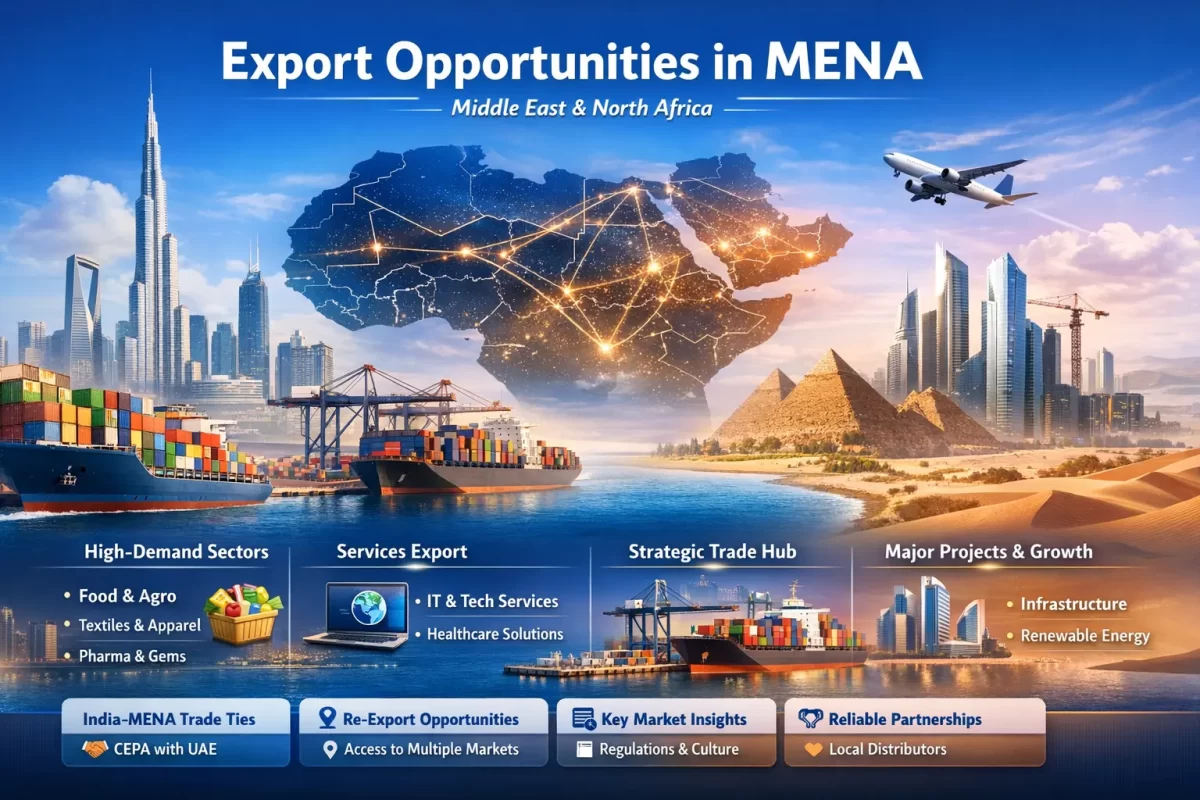
1. High-Demand Product Sectors
Indian exporters can tap into strong demand for:
Food & Agriculture
- Rice, spices, pulses, processed foods
- Halal-certified products
Engineering & Construction Materials
- Steel products, cables, pipes, tiles, sanitary ware
Textiles & Apparel
- Cotton garments, home textiles, readymade clothing
Gems & Jewellery
- Gold jewellery and diamonds (especially in UAE and Saudi markets)
Chemicals & Pharmaceuticals
- Generic medicines, medical supplies, specialty chemicals
MENA’s growing urbanization and infrastructure projects drive consistent demand.
2. Services Export Potential
The region is also a major market for Indian service providers:
- IT & software development
- Digital marketing and consulting
- Education and EdTech solutions
- Healthcare services and telemedicine
- Engineering and project consultancy
The UAE, in particular, acts as a regional headquarters hub for global firms.
3. Strategic Trade Location
MENA countries, especially the UAE, serve as global re-export hubs. Goods entering MENA can easily move to:
- African markets
- European trade routes
- Central Asian economies
This multiplies the reach of Indian exporters beyond one single country.
4. Strong India–MENA Trade Relations
India enjoys strong diplomatic and trade ties with MENA nations. Agreements such as the Comprehensive Economic Partnership Agreement (CEPA) with UAE improve tariff benefits, market access, and trade facilitation.
Many MENA governments are also investing in economic diversification, creating opportunities in:
- Renewable energy
- Smart cities
- Food security
- Digital transformation
5. Infrastructure & Mega Projects
Countries like Saudi Arabia and UAE are investing heavily in mega projects, tourism, and infrastructure development. This increases demand for:
- Construction materials
- Electrical and mechanical equipment
- Furniture and interiors
- Skilled professional services
Indian suppliers with quality products and competitive pricing can benefit immensely.
Key Considerations Before Entering MENA
While opportunities are strong, exporters must also ensure:
✔ Proper product certification (Halal, SFDA, ESMA, etc.)
✔ Understanding of local regulations and labeling requirements
✔ Cultural and business etiquette awareness
✔ Reliable local distribution partners
Preparation and compliance are essential for long-term success.
Conclusion
The MENA region offers a powerful combination of high demand, strategic location, and strong trade ties with India. Businesses that approach the region with proper market research, compliance readiness, and strong partnerships can unlock sustainable export growth.
For Indian MSMEs and professionals, MENA is not just a nearby market—it is a launchpad for global expansion.