The proposed India–UK Comprehensive Economic and Trade Agreement (CETA) 2025 is poised to become a landmark trade pact, strengthening economic cooperation between two major global economies. As India and the United Kingdom deepen their strategic partnership, the agreement is expected to unlock new avenues for trade in goods and services, promote investments, and enhance supply chain integration.
For Indian exporters, the India–UK CETA represents a significant opportunity to access a mature, high-value market with reduced tariffs, improved regulatory transparency, and strong demand for quality products and professional services.
Overview of India–UK CETA 2025
The India–UK CETA aims to create a comprehensive framework covering trade in goods, services, investment, intellectual property, digital trade, and regulatory cooperation. Once implemented, it is expected to significantly enhance bilateral trade flows, reduce market access barriers, and facilitate smoother cross-border business operations. The agreement builds upon the longstanding economic and cultural ties between India and the UK and aligns with India’s broader strategy of strengthening trade partnerships with developed economies.
Key Benefits for Indian Exporters
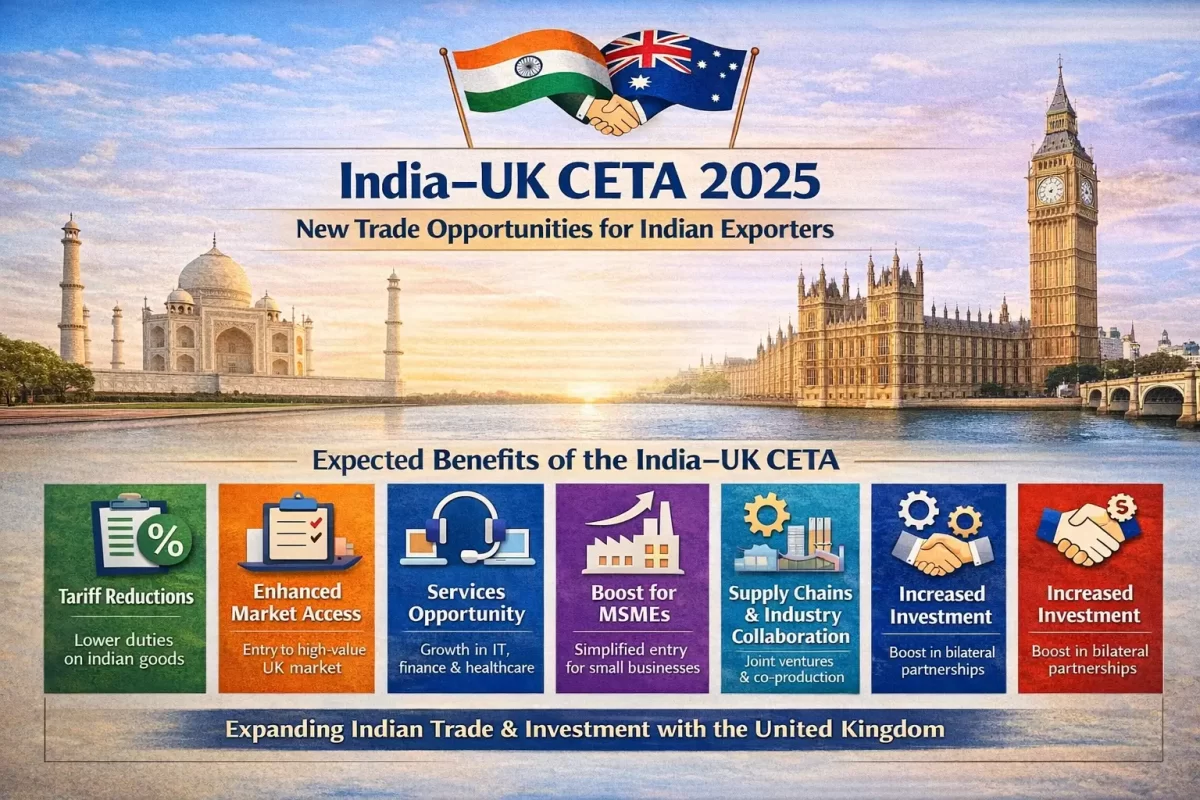
1. Tariff Reductions and Preferential Market Access
One of the core expected outcomes of the India–UK CETA is the reduction or elimination of tariffs on a wide range of Indian exports entering the UK market. This will improve price competitiveness for Indian goods and help exporters expand their presence in sectors such as:
- Textiles and apparel
- Gems and jewellery
- Pharmaceuticals and chemicals
- Engineering goods and auto components
- Agricultural and processed food products
Lower import duties will allow Indian products to compete more effectively with suppliers from other regions.
2. Access to a High-Value Developed Market
The United Kingdom is one of the world’s leading consumer markets, known for high purchasing power, strong regulatory systems, and a demand for quality and innovation. Through CETA, Indian exporters will gain easier entry into this sophisticated market, encouraging businesses to upgrade product standards, packaging, and branding to meet global expectations.
3. Major Opportunities for Services Exports
India’s strength in services is expected to benefit significantly from the India–UK CETA. Sectors likely to see strong growth include:
- Information Technology and digital services
- Financial and professional consulting services
- Healthcare and life sciences
- Education and skill development services
- Legal, accounting, and engineering services
Improved mobility provisions and regulatory cooperation will support Indian professionals and service firms in expanding operations in the UK.
4. Boost for MSMEs and Startups
The agreement is expected to create favorable conditions for MSMEs and startups by simplifying trade procedures and reducing entry barriers. Indian small businesses will have better opportunities to:
- Export niche and value-added products
- Build partnerships with UK distributors and retailers
- Participate in global value chains
This will strengthen MSME participation in India’s export ecosystem.
5. Strengthening Supply Chains and Industrial Collaboration
The India–UK CETA is likely to promote deeper collaboration in key sectors such as:
- Advanced manufacturing and engineering
- Renewable energy and green technologies
- Pharmaceuticals and healthcare innovation
- Digital economy and fintech
Such cooperation will enhance supply chain resilience and create opportunities for joint ventures and co-production.
6. Increased Investment and Innovation Partnerships
Beyond trade, the agreement is expected to boost bilateral investment flows and technology partnerships. UK companies may expand sourcing and manufacturing partnerships in India, while Indian firms can explore investments, acquisitions, and strategic alliances in the UK market.
This mutual investment climate will encourage innovation-led growth and knowledge transfer across sectors.
7. Contribution to India’s Export Growth Strategy
The India–UK CETA aligns with India’s broader goal of diversifying export markets and strengthening its presence in developed economies. By enhancing trade with the UK, India can reduce reliance on limited regions and build a balanced export portfolio with higher value-added goods and services.
The agreement is expected to play a crucial role in supporting India’s long-term export growth ambitions and integration into global value chains.
Challenges and Strategic Considerations
While the agreement presents significant opportunities, Indian exporters must also prepare for:
- Strict quality, sustainability, and regulatory standards in the UK
- Strong competition from established global suppliers
- Compliance with intellectual property and data protection norms
Businesses that invest in quality assurance, certification, and market research will be better positioned to leverage CETA benefits effectively.
Conclusion
The India–UK CETA 2025 is set to become a transformative trade agreement, unlocking new opportunities for Indian exporters in a high-value developed market. With tariff reductions, enhanced services access, and deeper industrial collaboration, the agreement will strengthen bilateral trade and create long-term growth pathways.
For Indian businesses aiming to expand globally, the India–UK CETA represents a strategic gateway to Europe and advanced economies, enabling sustainable export growth and stronger international competitiveness in the years ahead.